There are mornings when a vehicle feels like nothing more than a means to an end. The key turns, the engine settles, and you slip into traffic with the quiet resignation of someone who has done this too many times before. School runs. Work routes. The same corner shop. The same pothole you swear grows deeper each week.
And yet, on a different day, same car, same road, the experience shifts. A stretch opens up just beyond the last cluster of houses, the engine breathes a little easier, and suddenly the vehicle stops feeling like a burden. It becomes something else. Not quite freedom, but close enough to taste.
That duality sits at the heart of what a vehicle really is. Tool. Toy. Testament. Most of us live with all three, often without noticing where one ends and the other begins.
As a tool, the vehicle is brutally practical. There’s no romance in a car that starts every morning, but there’s a kind of quiet dignity in it. In places where public transport can be unreliable or limited, a vehicle isn’t optional, it’s infrastructure on four wheels. It carries groceries, children, building materials, and sometimes entire livelihoods.
Look at the tradesman with a trayback loaded past what it was ever designed to carry. Or the taxi driver who knows every shortcut through side streets that aren’t on any map. Or the parent balancing schoolbags, groceries, and a tired child who fell asleep five minutes before reaching home.
These are not cinematic moments. They’re repetitive, often exhausting, and absolutely essential.
And yet, the condition of the vehicle matters. Not just mechanically, but emotionally. A clean dashboard. A seat that doesn’t sag. A radio that still works. Small details that don’t change the function but change the experience.
Because even tools, when used daily, begin to absorb something of the people who depend on them.
Then there’s the other side, the one that shows up late at night or early on a Sunday.
The roads are quieter then. Not empty, but looser. You can feel it in the way drivers move, less guarded, more willing to let the car stretch a little. The same vehicle that crawled through traffic all week suddenly feels responsive. Alive, even.
This is where the vehicle becomes a toy, not in the sense of something trivial, but something enjoyed for its own sake.
You see it in the way people talk about their cars when they’re not complaining about fuel prices or repairs. The subtle pride in a well-kept paint job. The way someone lingers just a second longer after parking, glancing back before heading inside. The care put into a set of rims that most people won’t notice.
Even modest vehicles carry this energy. It’s not about horsepower or brand names. It’s about the relationship.
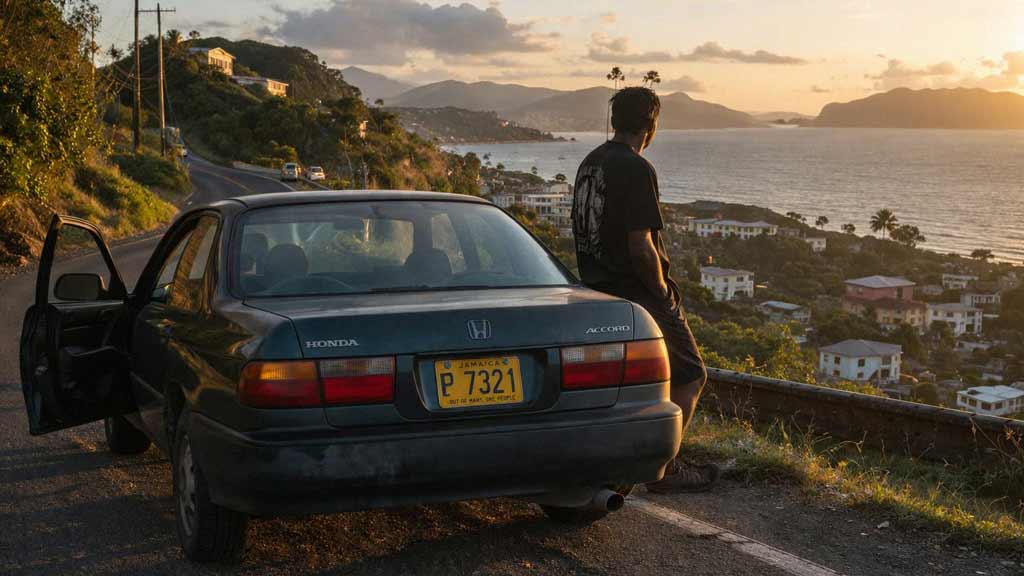
A quiet road winding up toward the hills. A coastal stretch where the air shifts and the light softens. A late-night drive with no destination, just movement. These are not practical journeys. They don’t need to be.
They remind you that driving can still feel like something chosen, not just required.
And then there’s the part that’s harder to name.
A vehicle, over time, becomes a record. Not in the formal sense, but in the way certain scratches, smells, and sounds attach themselves to memory. The faint rattle that only appears on a specific road. The seat that still holds a crease from when it was new. The glove compartment filled with things that no longer have a clear purpose.
You start to remember moments through the vehicle. The first long drive after buying it. The trip that went wrong halfway through. The time it broke down at the worst possible place and somehow still got you home.
In that way, a vehicle becomes a testament, not to engineering, but to experience.
It’s easy to overlook this. Especially now, when vehicles are increasingly defined by specifications. Screens, sensors, efficiency ratings. All useful, all measurable. But none of it captures what it feels like to live with a vehicle over time.
The older cars make this easier to see. Fewer distractions. More direct interaction. You feel the road more clearly. You hear the engine without filters. There’s less separation between driver and machine.
But even newer vehicles, with all their technology, eventually accumulate the same kind of history. It just takes longer to notice.
What’s interesting is how these three identities, tool, toy, testament, don’t stay in separate lanes. They overlap constantly.
A work vehicle becomes something you take pride in. A weekend car ends up carrying unexpected responsibilities. A well-used daily driver becomes something you can’t quite bring yourself to sell, even when it no longer makes sense to keep it.
There’s a kind of honesty in that.
Because the way someone treats their vehicle often says more than the vehicle itself ever could. Not in a superficial way, brand, year, condition, but in the small decisions. The maintenance they keep up with or ignore. The way they drive when no one is watching. The care, or lack of it, in the details.
It reveals priorities. Habits. Sometimes even a bit of personality that doesn’t show up anywhere else.
And in places where the road network itself feels unpredictable, where conditions shift, where routes demand constant adjustment, that relationship becomes even more pronounced. You learn your vehicle in a way that goes beyond the manual. You listen for changes. You adapt.
You rely on it, but you also negotiate with it.
Not every drive will feel meaningful. Most won’t. They’ll blur together, indistinct and forgettable. But every now and then, something shifts. The light hits differently. The road opens just enough. The vehicle responds in a way that reminds you it’s more than just a machine.
Those moments don’t last long.
They don’t need to.