The promise is simple and widely repeated: buy a proper motorcycle and you will learn faster, ride better, and grow into the machine. Power is framed as headroom. Capability waiting for you to catch up.
That is the claim.
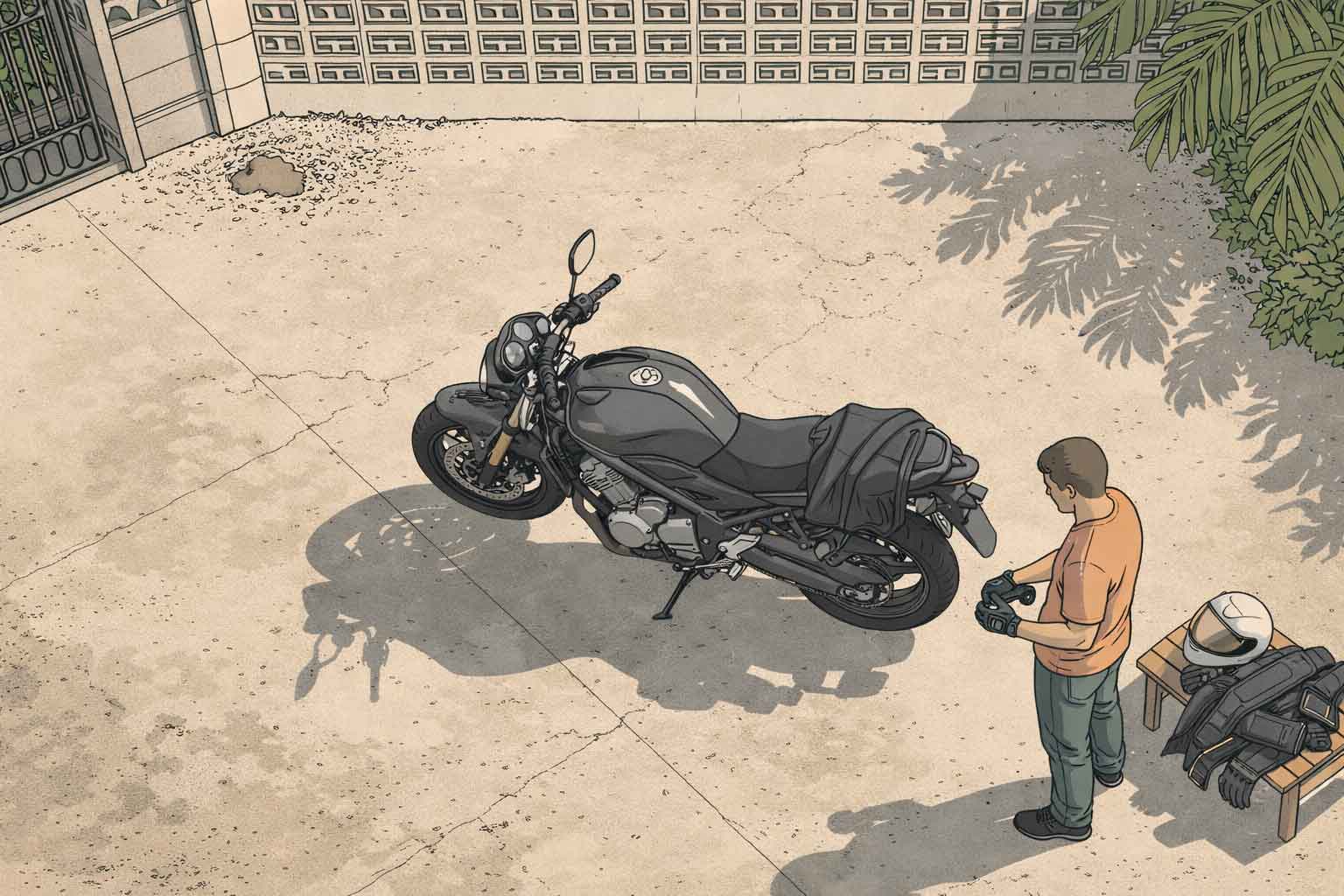
The first discrepancy appears before the engine even settles into idle. It happens when the kickstand comes up for the first time and the bike shifts from object to obligation. The weight is not theoretical. It is not the number printed on a spec sheet. It is a sideways pull through your wrists and hips that wants to continue past balance. You correct it, overcorrect it, feel the suspension compress, then hold still as if stillness itself might solve the problem.
A heavier bike does not teach faster. It teaches hesitation. Low speed becomes a negotiation instead of a skill. Every parking lot turn is done with a calculation running in the background. If it goes past a certain angle, there is no saving it. The machine is stronger than you. That fact settles in early.
Manufacturers do not sell that moment. They sell stability at speed, planted handling, confidence. Those things exist, but they do not exist at walking pace, which is where most mistakes happen.
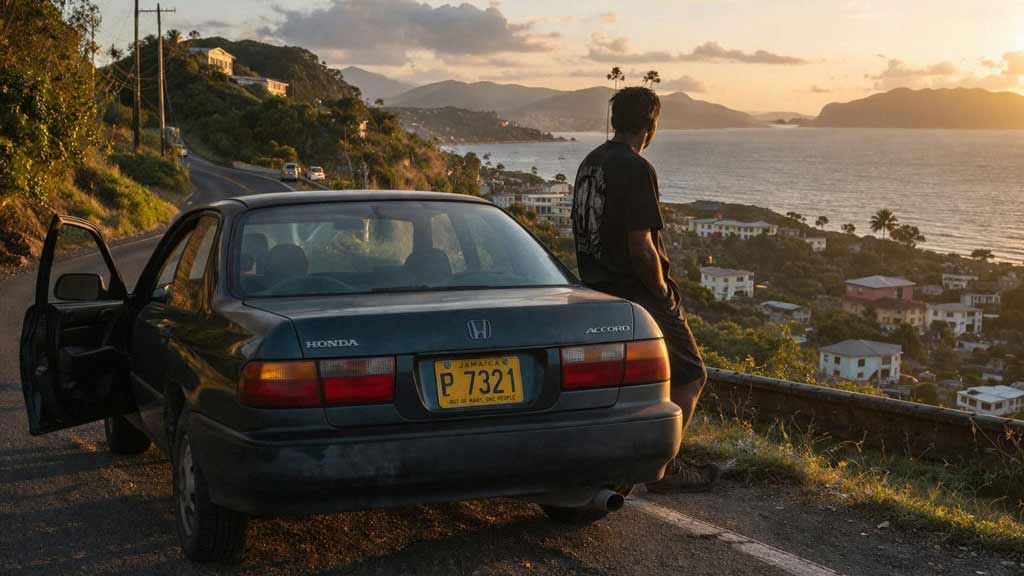
The roads that advertise those strengths are not abstract. They have names: the Churchill–Roosevelt Highway, the Uriah Butler Highway, the Sir Solomon Hochoy Highway. The limit is 100 kilometres per hour. That is the ceiling. The machine may be capable of far more, but the environment is not.
The second gap shows up in the ritual that surrounds the ride. The phrase is “all the gear, all the time.” It sounds disciplined. It sounds like a system that reduces risk through consistency.
On paper, it works.
In practice, it meets humidity.
A three minute trip to the pharmacy becomes five minutes of preparation. Jacket first. Then gloves. Then helmet. The jacket is designed for airflow, but airflow assumes motion. Standing still in a small yard, the heat builds inside the lining. Sweat starts before the engine is even on. By the time the visor comes down, your breath fogs it slightly at the edges.
The system promises safety through habit. What it delivers is tension.
That tensions leads to exceptions. The short ride without the jacket. The quick errand without gloves. The system weakens exactly where it is supposed to be strongest. Not because the rider is careless, but because the cost of compliance is mispriced for the environment.
No one includes climate in the recommendation. The advice is imported intact, as if every rider lives in dry air and moderate temperatures.
There is a small detail that tends to stay with people who ride long enough. The inside of a helmet smells different after twelve minutes than it does after two. That is not a statistic. It is a time marker. It measures how quickly the ideal breaks down.
The third discrepancy is perceptual. Riding changes what counts as a threat.
Before the bike, a patch of gravel is texture. On the bike, it is a variable. Oil near a traffic light is no longer a stain. It is a low traction surface exactly where you need traction to stabilize and turn. Painted road markings become slick in the rain. Metal plates are worse.
Then there are potholes.
Not the large, obvious ones that a car absorbs with a thud. The smaller, sharp edged depressions that sit just outside the line of sight, partially filled, difficult to read at speed. Each one is a decision point. Brake, swerve, commit. None of the options are clean.
And then there are the pothounds.
They wait at corners, half-hidden in shade, uninterested until the engine note changes. Then they move. Not predictably, not away from you, but toward the line you are already committed to. They do not behave like traffic. They behave like interruption. For many riders, they are more feared than the road itself.
The promise of motorcycling often includes awareness. Heightened senses. A better connection to the road.
That part is true.
The cost is constant load. Every surface detail is now relevant. Every driver is a potential input. Every side street is a question. The mind does not get to idle. It scans, predicts, adjusts. Over time, that load accumulates. Fatigue does not feel like tiredness. It feels like a slight delay in reaction, a moment where the calculation runs a fraction too long.
No brochure accounts for cognitive overhead. It is not visible, so it is not priced.
The final and most expensive gap sits in the engine size.
The assumption is straightforward. A larger engine provides room to grow. A smaller one will be outgrown quickly. The smaller bike is often dismissed with a single phrase. It looks like a toy.
So the buyer chooses a 600 or a 1000. Something that signals seriousness. Something that will not need to be replaced.
The numbers are persuasive. Horsepower, torque, top speed. Acceleration times that compress distance into something abstract.
The reality is narrower.
On public roads, usable power is constrained by law, by traffic, and by the rider’s own tolerance for risk. The throttle becomes a limiter. Most of its range is never explored. The engine is capable of far more than the context allows.
There is a quiet ratio that experienced riders sometimes mention without naming it. The percentage of a bike’s capability that can be used consistently without crossing into danger or illegality.
For a large displacement sport bike, that number can sit around ten percent. Sometimes less.
The rest is reserve that rarely gets accessed. It exists, but it does not contribute to daily riding. What it does contribute is weight, heat, insurance cost, and a sharper response that punishes small mistakes.
A smaller displacement bike, often dismissed early, tends to invert that ratio. More of its capability is usable, more of the time. The rider operates closer to the machine’s limits without exceeding their own. Skills develop in that space. Throttle control becomes meaningful because the full range can be explored safely.
The market frames this as compromise. It is closer to alignment.
There is also maintenance.
Not just the routine costs, but the delays. A worn part is not always a quick replacement. It becomes an order. Japan, sometimes the US, occasionally Europe. Shipping times stretch. The bike sits. The cost is not only the part itself, but the waiting.
Larger engines and higher performance components amplify this. Tires wear faster under higher torque. Chains stretch. Brake components see more stress. Each item is another dependency, another import, another pause.
None of these costs are hidden, but they are rarely emphasized in the initial decision.
The promise was growth. The delivery is underutilization with higher overhead.
Across all of these gaps, a pattern emerges. The system is designed around an ideal rider in ideal conditions. The actual rider exists in a specific place, with specific roads, specific weather, specific interruptions.
The mismatch is not dramatic. It is incremental. Each small tension point adds up. The heavy bike that discourages practice at low speed. The gear routine that gets skipped on short trips. The constant vigilance that drains attention. The excess power that cannot be used. The machine that waits weeks for a single part.
None of these invalidate motorcycling. They just redefine what the first bike should be.
A useful question is not “what will I grow into,” but “what will I actually use, every day, without resistance.”
Another is “what parts of this system depend on ideal conditions that I do not have.”
And a third, less comfortable one: “what percentage of this machine will remain theoretical.”
There is a version of the first bike that aligns with reality. It is lighter than expected. It looks smaller than the image in your head. It does not announce itself. It allows mistakes at low speed without immediate penalty. It keeps the rider within a range where feedback is clear and manageable.
It may also be the one that feels slightly embarrassing at a stoplight.
That feeling is part of the audit. It measures the gap between image and function.
The machine does not care about that gap. It responds to inputs, to weight, to traction, to timing. It rewards consistency more than ambition.
The initial promise suggested that more would accelerate progress. The evidence points in the other direction. Less, used fully, produces more.
The discrepancy is not hidden. It is just easier to ignore when the engine is off and the bike is still on its stand.