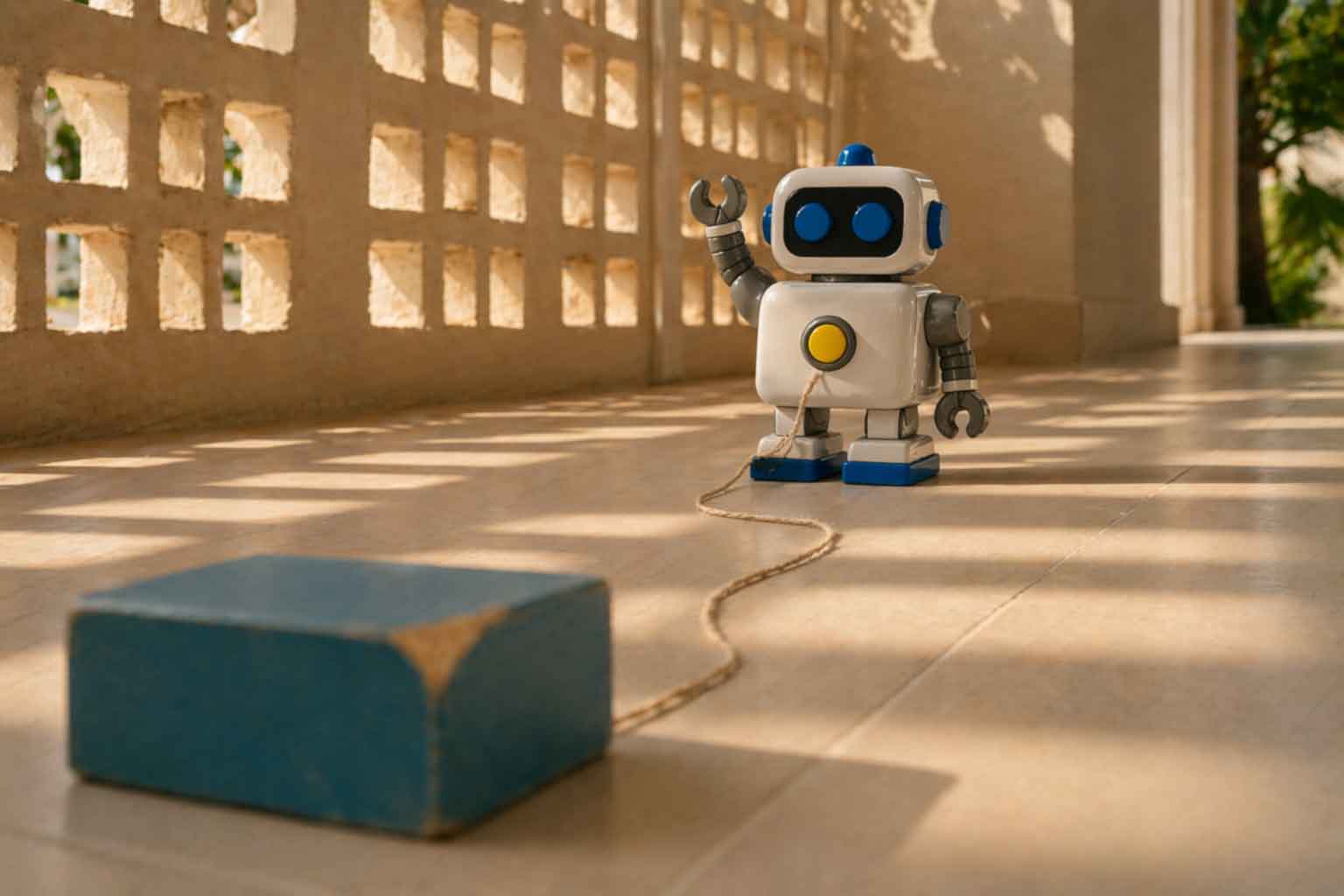
The robot sits on the carpet.
It has two blue eyes made of plastic. They light up when you press the button on its chest. The button is yellow. It is exactly where you would expect a button to be.
I watch a boy, maybe four years old, approach it.
He presses the yellow button. The robot says "Hello, friend." Its arm raises. The movement is smooth, motorized, perfect. The boy watches. He does not react. He presses the button again. "Hello, friend." The arm raises again. Same height. Same speed.
He presses it a third time.
The robot says "Let's play a game." The boy looks at his mother. He does not know what game. The robot does not explain. It begins to hum a tune. Eight notes. Then it stops. The boy walks away.
He does not come back.
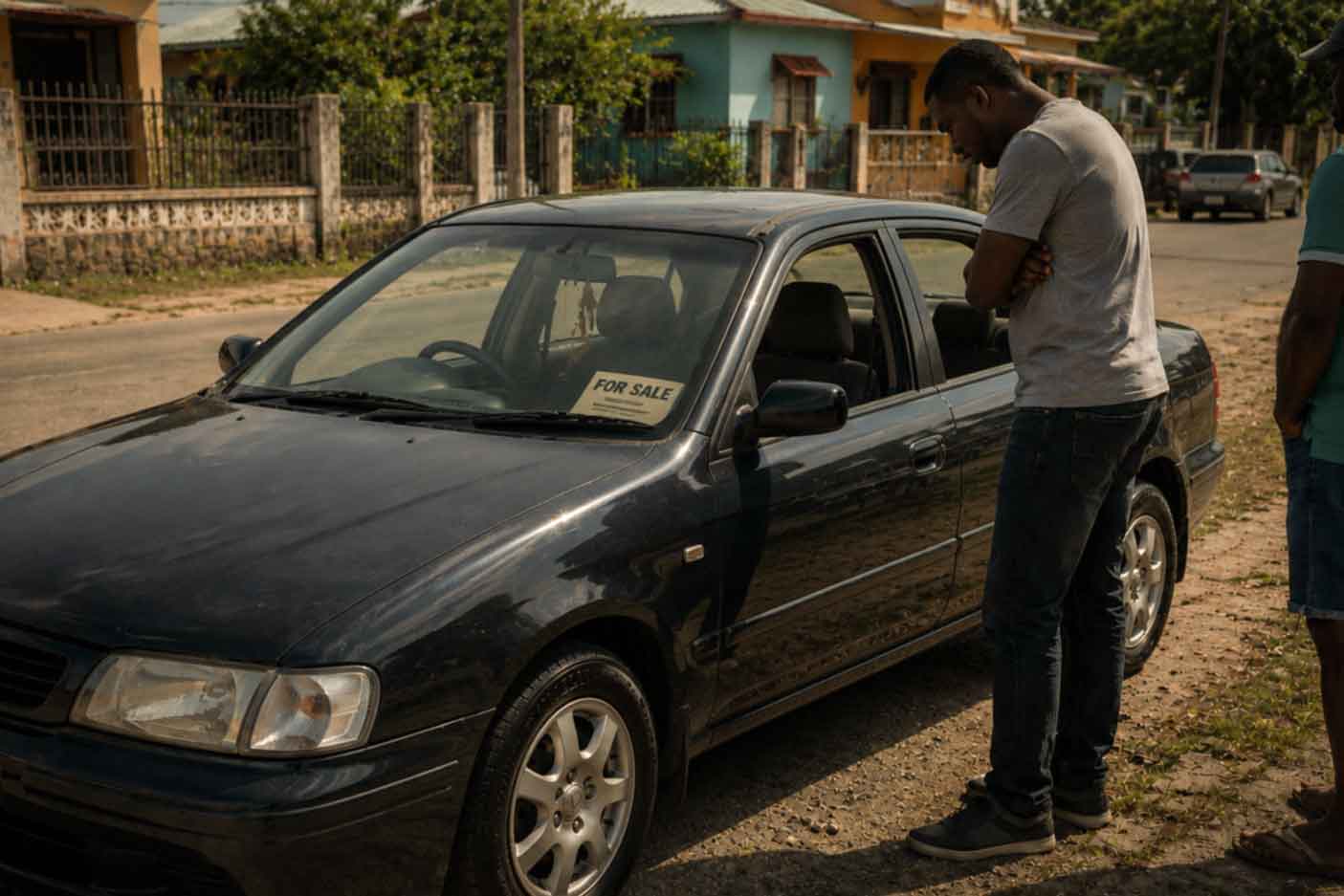
I have been thinking about this for weeks.
Not the boy. He is fine. He is probably outside now, drawing on the pavement with chalk. I am thinking about the robot. About what it means to be complete.
The box said "Interactive Learning Toy. 3+."
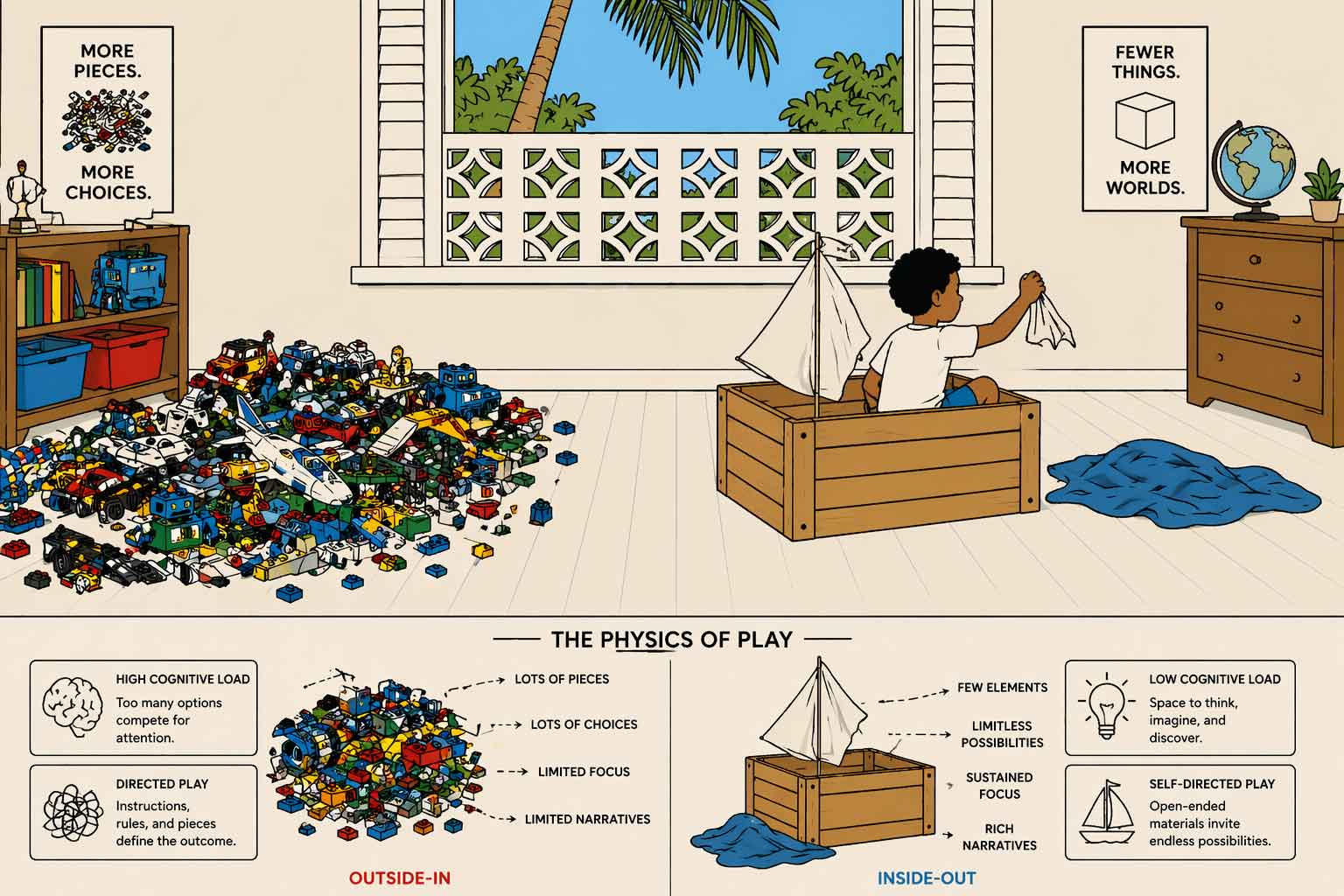
It had a list of features on the back. Twelve phrases. Three languages. Voice recognition. Motion sensors. The language was all capacity. What it *could* do. No one asked what it *could not*.
There is a wooden block on the same carpet.
It is not a set. It is not part of a system. It is just a block. Someone painted it blue a long time ago. The paint is chipped on one corner.
A different child picks it up. A girl. She holds it to her ear. She is talking. Her voice is low. Serious. She is making arrangements. She hangs up. The block becomes a slice of bread. She is making a sandwich. She adds another block. That is cheese. She bites the air.
The block does nothing.
It does not light up. It does not speak. It does not raise an arm or hum a tune. It waits. It accepts whatever she gives it. It never argues. It never runs out of phrases.
The robot has a ceiling.
I do not mean the physical kind. I mean the invisible one. The one built into its circuits.
After the third press of the yellow button, I already know what the fourth press will do. After the fourth, the fifth. There is no mystery. There is no negotiation. The robot has decided everything in advance. The child is not playing. The child is *triggering*.
The box called this "responsive."
The Auditor would call this a closed loop.
I sit with the robot for an hour. Alone. I press the yellow button until I have heard every phrase. It takes eleven minutes. Some repeat. There are not twelve. There are seven. They said twelve on the box.
The robot does not know it lied.
It keeps raising its arm. Same height. Same speed. I watch the arm go up. I watch it come down. Up. Down. The motor makes a small sound. Not loud. Just present. A tiny whir. You would not notice it in a store. In a quiet room, you cannot ignore it.
The whir is the sound of predictability.
The block has no whir.
It has no phrases. No voice recognition. No motion sensors. It has a chipped corner. That is all. That chip is more interesting than anything the robot said.
Because the chip tells a story.
Someone dropped this block. Or threw it. Or it fell off a table. The chip is evidence of a life. The robot has no chips. It has no scratches. It arrived perfect. It will leave perfect. Nothing will happen to it that was not already written.
The boy comes back.
He picks up the robot. He does not press the button. He turns it over. He looks at the battery compartment. There is a small screw. He tries to turn it with his finger. It does not move. He shakes the robot. Something rattles inside. A loose wire. Or a small piece of plastic. He shakes it again.
The robot says nothing.
The boy smiles. He shakes it harder. The rattle is new. The robot did not come with a rattle. The boy has found something the engineers did not intend. He shakes it again. He is not playing with the robot now. He is playing with the rattle. The robot is just the container.
He abandons the robot five minutes later. The rattle is gone. He could not find it again. He tried. He shook the robot from every angle. Nothing.
The silence returns.
I think about the phrase "high functioning."
It is a strange thing to call a toy. High functioning for what? For whom? The robot functions perfectly. It does everything it was told to do. The problem is not the functioning. The problem is what the functioning *replaces*.
Every sound the robot makes is a sound the child does not have to make.
Every movement is a movement the child does not have to invent.
Every decision is a decision already made.
The robot is not a collaborator. It is a shortcut.
The block has never taken a shortcut.
It sits on the carpet. The light shifts across its surface. Morning. Afternoon. Evening. The paint chip catches the sun at four o'clock. For ten minutes, it glows. Then the sun moves. The chip returns to being a chip.
No one sees this but me.
The block does not care.
I return to the robot one more time.
I press the yellow button. "Hello, friend." The arm raises. I watch the plastic fingers. They are molded into a loose fist. They do not open. They cannot hold anything. The robot cannot pick up the block. It cannot pick up anything. Its hands are decorative.
This is the detail that stays with me.
Not the phrases. Not the lights. Not the voice recognition. The hands. The hands that do nothing. The hands that were never meant to do anything. The robot is complete, but its hands are useless.
The block has no hands. It does not need them.
The boy is outside now. I can hear him through the window. He is not playing with chalk anymore. He is running. I cannot see him, but I can hear his feet on the pavement. Slap slap slap. He is making the sound himself. No batteries. No circuits. No pre programmed phrases.
He is not finished yet.
Neither is the block.