There was a time when you could stand in front of a shop and not be expected to do anything at all.
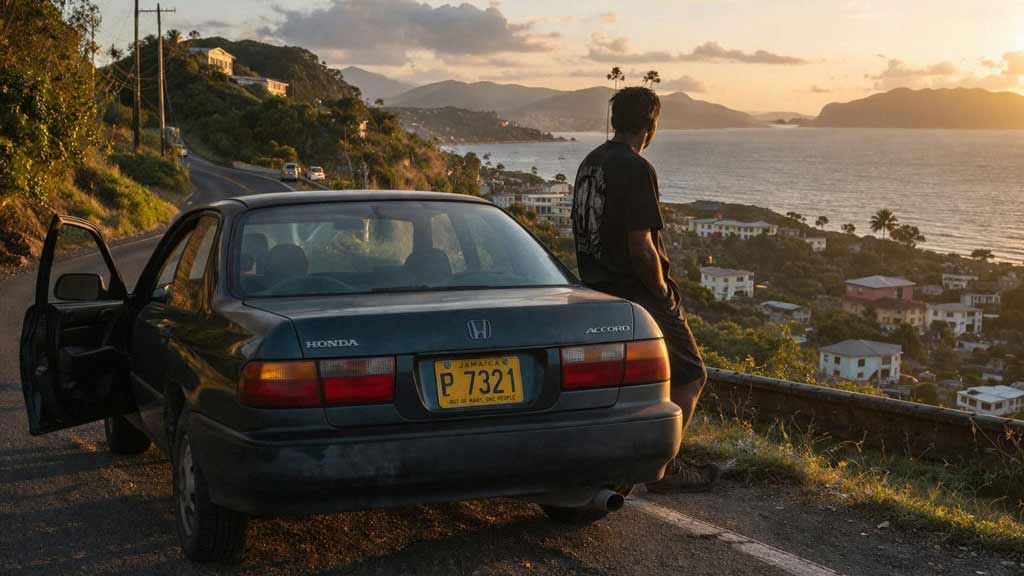
You could lean against a doorway, half in the shade, half in the street. You might have gone there to buy something, or maybe not. Someone inside would glance up, register your presence, and return to what they were doing. No one asked questions. You were allowed to be there without a reason.
That detail has quietly disappeared.
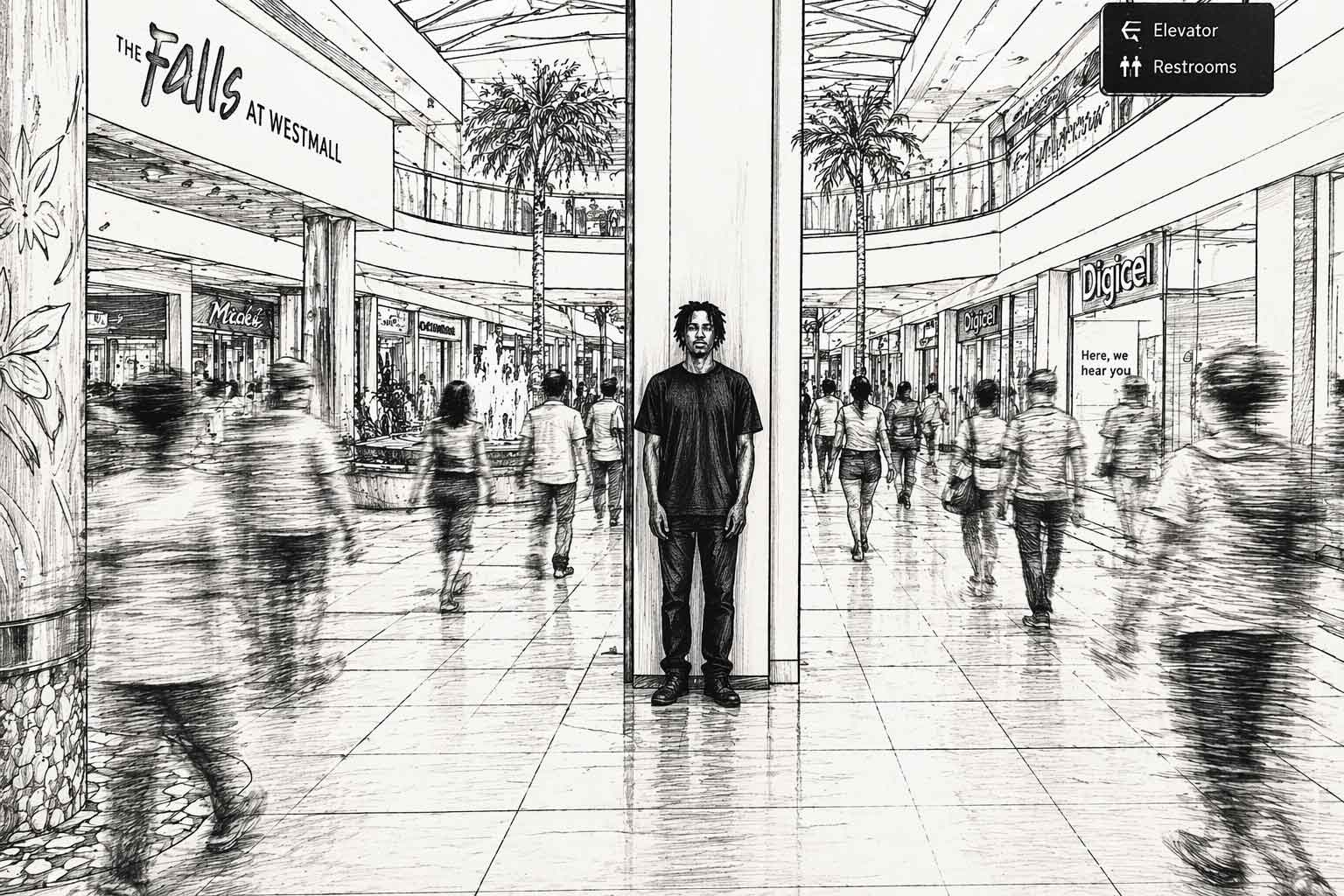
Retail spaces no longer tolerate stillness. They are designed to move you along. Doors slide open automatically, lights guide your path, displays pull your attention forward. Even the absence of staff interaction feels intentional, like a system that has decided how much of you it needs and for how long.
The idea of loitering now reads as a problem to be solved.
You can see it in the architecture. Open corridors with no real edges. Benches placed just far enough from storefronts to keep bodies separate from commerce. Security positioned not as presence but as perimeter. Cameras don't just watch for theft. They measure patterns. How long you paused. Where you lingered. What caught your eye.
Time inside a commercial space has become trackable.
On an older Frederick Street, time moved differently. You could step into a shop and leave with less than you came for, at least materially. Maybe the item wasn't there. Maybe the shopkeeper suggested you try somewhere else. Maybe you stayed longer than you planned, caught in a conversation that had nothing to do with the transaction.
There was no urgency to justify your presence.
Now there is always a quiet expectation that you are on your way to something. Even browsing has been optimized. Stores are laid out to create flow, not pause. Entry points open into curated zones. Best sellers near the front. New arrivals positioned at eye level. There is a path whether you notice it or not.
Standing still interrupts that path.
In many places, it isn't even subtle anymore. Signs that ask you not to linger. Guards who approach if you stand too long without engaging. Staff trained to convert hesitation into action. Can I help you find something. It sounds polite, but it carries a second meaning. Are you going to participate in this space as intended.
Participation now means purchase, or at least the clear possibility of one.
There is something revealing in how quickly discomfort sets in when you break that pattern. Try standing just outside a store for five minutes without looking at your phone. Not waiting for someone. Not checking messages. Just standing. It feels strange, almost confrontational, like you are refusing an unspoken agreement.
That agreement is simple. You are here to move, to browse, to buy, and to leave.
Spaces like West Mall sit at an interesting point in this shift. They were never quite Frederick Street, but they were never fully sealed systems either. You could drift there. Meet someone by chance. Sit longer than you needed to. Watch people move between errands without being pulled into every storefront.
There is still a trace of that looseness.
But it feels thinner now. Renovations tend to smooth out the irregularities. Lighting becomes more uniform. Walkways more directed. Tenants more standardized. The small gaps where people could exist without purpose begin to close. Not dramatically. Just gradually, like a place becoming more certain of what it wants to be.
And what it wants to be is efficient.
Efficiency doesn't leave much room for loitering. It treats unstructured time as waste. If someone is standing still, they are not converting. If they are not converting, they are not part of the system that justifies the space.
So the space adapts.
Seating becomes strategic rather than generous. Music fills silence so that stillness feels less natural. Sightlines are opened up, not for beauty, but for visibility. Even comfort is calibrated. Enough to keep you there while you are engaged, not enough to encourage you to stay without purpose.
It's easy to frame this as progress. Cleaner spaces. Better organization. More predictable experiences. You know what you will find when you walk in, and you know how long it will take to get it.
There is a certain relief in that.
But something else slips out quietly. The ability to exist in a commercial space without being reduced to a role. Customer. Target. Data point. Conversion opportunity.
On an older Frederick Street, you could be none of those things for a while. You could just be a person standing in a place, taking in the day, letting time stretch a little. The shop didn't demand anything from you beyond basic presence.
That absence of demand mattered more than it seemed.
Because it created room for chance. For conversations that started without purpose. For recognition that wasn't tied to a transaction. For the small, unplanned moments that made a place feel like it belonged to people rather than the other way around.
When those moments disappear, the space changes in ways that are hard to measure but easy to feel.
It becomes sharper around the edges. More precise. Less forgiving.
You move through it instead of into it.
West Mall hasn't fully crossed that line, but you can see where it's heading. The upgrades, the tightening of layout, the subtle push toward a more controlled experience. None of it is dramatic on its own. Together, it shifts the atmosphere.
You notice it in how long you stay.
You arrive with a purpose. You complete it. You leave. The in between shrinks.
And maybe that is what modern retail ultimately asks of us. Not just our money, but our time in its most structured form. Time that can be predicted, guided, and measured. Time that doesn't spill over into something unplanned.
Loitering doesn't fit into that model.
So it fades, not because anyone explicitly banned it everywhere, but because the spaces themselves stopped allowing for it.