Advertisement
Advertisement

The Stilt, Not the Lecture

Why Traditions Survive Through Falling, Not Through Paperwork

I watched a teenager roll his eyes at a heritage workshop once. He was not being rude. He was bored. Someone had pulled him out of a football game to stand in a hot room and listen to an older person talk about the old days. I do not blame him for the eye roll. But I also noticed something else. Twenty minutes later, that same teenager was holding a stilt, trying to balance, laughing when he fell. The talking stopped. The doing started.

That is the difference between announcing a tradition and actually keeping it alive.

The National Trust runs something called the Heritage Keepers Project. Students go into their own communities and document what matters to them. They create heritage journals. Those journals go into school libraries. Not hidden in some ministry archive downtown. In the library. Where other students can pull them off the shelf and argue with what they read. That is the part I like. The arguing.

Because traditions are not fragile glass. They do not break if you handle them roughly. They break if you stop handling them at all.

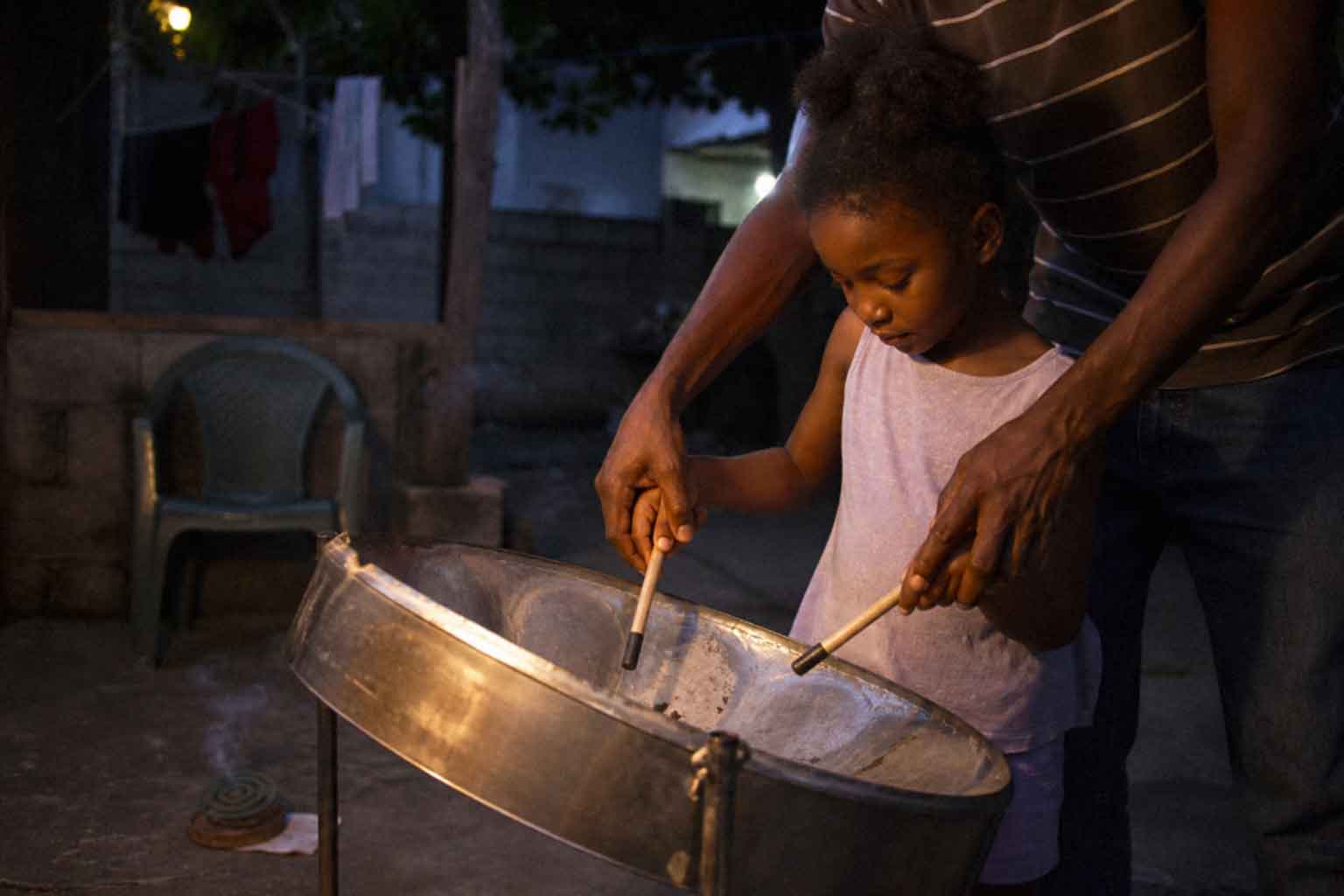
I have seen too many preservation efforts that treat culture like a museum exhibit. Do not touch. Stand behind the rope. Look but do not participate. That approach fails every time because it misunderstands what a tradition is. A tradition is not an object. It is an action that gets repeated. And actions require bodies. Hands. Mistakes. Someone teaching and someone else learning badly at first and then better later.

The Tiny Mas, Big Heritage event at Mille Fleurs got this right. Children did not just watch a Moko Jumbie. They strapped on the stilts. They fell. They got up. They tried again. That is not a metaphor. That is literally what happened. And every fall was more valuable than any lecture on the history of stilt walking.

Here is something I believe plainly. If a tradition cannot survive a child doing it badly, it was never going to survive at all.

The Minstrel character from old Carnival is making a quiet comeback. Not because someone wrote a good grant proposal. Because portrayers decided to put on the costume and walk through the streets. People saw them. Asked questions. Took pictures. Shared stories. That is not revival. That is just living. The word revival suggests something dead came back. But the Minstrel never died. It just went quiet for a while.

I think about the Arima Dial sometimes. Landmarks mean different things to different generations. To my grandmother, it was a meeting point. To my cousin, it is where she waits for the taxi. To a group of older men, it is where they lime on a Saturday afternoon. Same spot. Different meanings. That is not confusion. That is continuity. The place holds all of them at once.

We spend a lot of time worrying about what young people do not know. We complain that they cannot name the old Carnival characters or sing the old songs. But complaining is not teaching. And teaching is not telling. Teaching is handing someone a stilt and standing close enough to catch them.

The teenager with the eye roll eventually walked away from that workshop still talking about the stilt. Not the lecture. The stilt. That is what he will remember in ten years. Not the facts. The feeling of almost falling and then finding his balance.

That is the only preservation method that has ever worked. Everything else is just paperwork.

Not everything worth reading starts as an assignment. If you've been sitting with an idea, there's space for it here.

Advertisement
Advertisement

Read More

Excavator working on a new residential construction site with wooden frames.
HOME & PROPERTY

Building a Home in Trinidad and Tobago: A Complete Guide from Start to Finish

Building a home is one of the largest financial decisions most people will ever make. In Trinidad and Tobago, it is not a single step but a chain of them, moving through agencies, professionals, approvals,…

By The Notebook
old cassette tapes
RECOLLECTIONS

The Soundtrack of the Cassette: The Art of the Mixtape

I still remember sitting too close to the radio, finger hovering, waiting for the exact opening bar. Not the fade-in version. Not halfway through. The real start. If you knew the song well enough, you…

By The Archivist
Waiting in line at the counter
THE INFORMAL LEDGER

The Trust Algorithm

Behind me, a woman scrolls through WhatsApp, pausing on a voice note and replaying it with the phone close to her ear. You can hear the faint spill of someone promising delivery by Thursday.

By Editorial Desk
Car for sale in residential street
MOTORIA

Dashboard Lights Sellers Hope You Ignore

Run your hand lightly across the tread surface. If it feels choppy or uneven like small steps, suspension parts may already be wearing out. Some buyers only notice this after the steering wheel starts vibrating…

By The Notebook
interior of old house
DOMESTIC ANTHROPOLOGY

The Shared Roof: From Boarding Houses to Branded Apartments

She did not set out to become this kind of landlady. It happened slowly, the way most things do. A spare room became two. A cousin stayed longer than expected, then brought a friend. Someone…

By The Narrative Voice
Guiding hands at twilight
CUSTOMS & TRADITIONS

Keeping Traditions Alive

I grew up hearing that if something is written down, it becomes real. Official. Permanent. But I have also watched a man in his seventies teach a nine year old how to hold a pan…

By The Street View
Hot doubles at the market stall
FOOD AND CULTURE

Food That Sees You

That anticipation is not perfect. It is not meant to be. Sometimes they get it slightly wrong. Too much pepper. Not enough sauce. A different piece than you expected. But even that carries a kind…

By The Street View
old-house-in-sunset-lighting
ARCHITECTURAL SOCIOLOGY

From Hearth to Asset: How the Meaning of ‘Home’ Has Shifted Over 150 Years

In parts of south Trinidad, you can watch this happen almost in real time. A piece of land that once held a single house is divided, then divided again. The original structure is either renovated…

By The Narrative Voice
Neighbourhood drama under the sunset sky
CULTURAL MEMORY

The Christmas Barrel

You could tell before anyone said it. The taxi would slow down at the corner, not quite stopping, just easing into the street like it had something to deliver that needed attention. Somebody would notice…

By The Archivist
Sharing memories over tea and photos
RECOLLECTIONS

The Family Photograph Album

The edges of the photo are slightly curled, pushing against the plastic. It has been lifted before. Maybe more than once. Maybe by different hands.

By The Archivist
Evening kitchen glow and shadows
FOOD MEMORY

The Chair Across From Me: Pushed in Properly

One plate is on the counter. Another in the microwave, door half closed, light still on. Someone passed through here already. You can tell by the spoon in the sink with a line of sauce…

By The Archivist
Preparing for a ride in the yard
MACHINE & MAN

The First Bike Paradox

There is a small detail that tends to stay with people who ride long enough. The inside of a helmet smells different after twelve minutes than it does after two. That is not a statistic.…

By The Auditor